
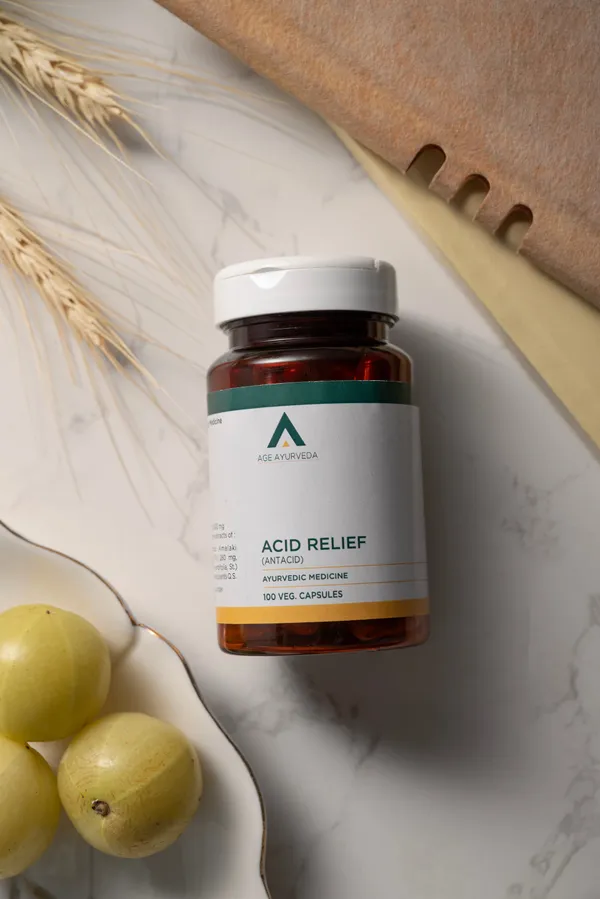

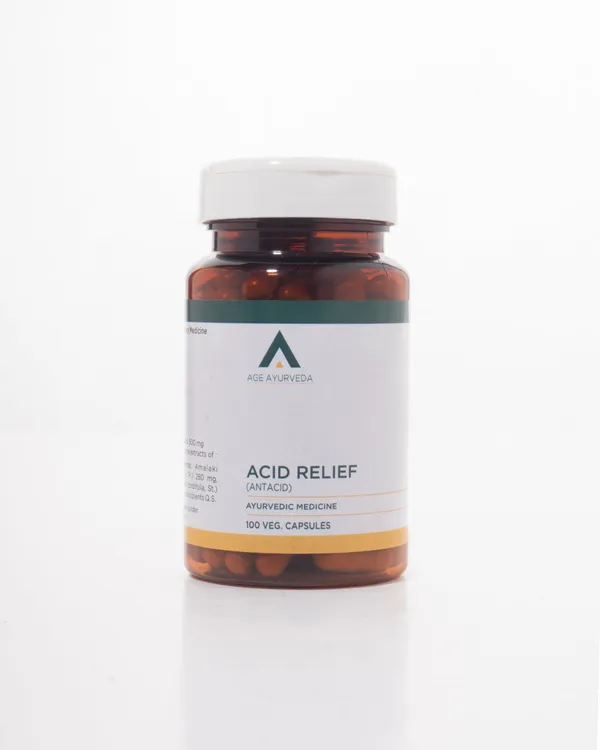





Acid Relief
₹509
₹549
7% OffFinal Price inclusive of all taxes
Cash on Delivery
Free Delivery
Get it delivered in 4-9 days
size
100 Capsules
Product Information
Brand
Age Ayurveda
Ingredients
Amla, Mulethi, Saunf, Jeera
Usage
Relieving Acidity And Indigestion
Product Type
Ayurvedic Digestive Supplement
Pack Of
1
Country of Origin
India
Product Description
DESCRIPTION:
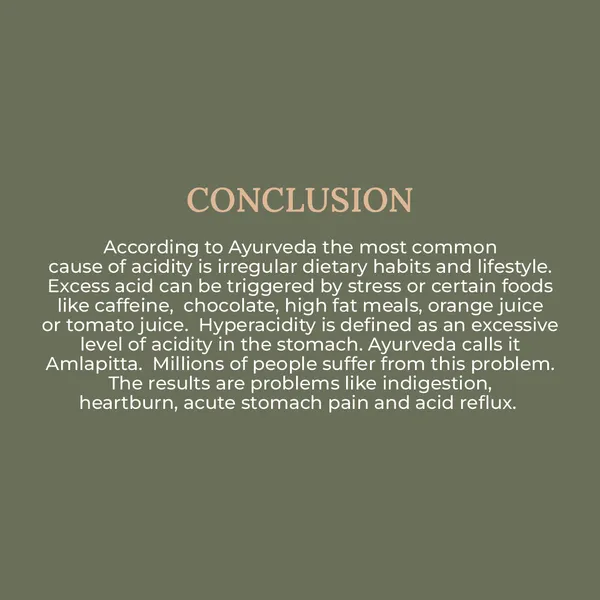
According to Ayurveda the most common cause of acidity is irregular dietary habits and lifestyle. Excess acid can be triggered by stress or certain foods like caffeine, chocolate, high fat meals, orange juice, or tomato juice. Hyperacidity is defined as an excessive level of acidity in the stomach. Ayurveda calls it Amlapitta. Millions of people suffer from this problem. The results are problems like indigestion, heartburn, acute stomach pain, and acid reflux.
SELF-CARE TIP:
Dietary habits: Develop regular eating habits and eating times and avoid overeating, irregular eating, eating when earlier food is not digested, prolonged fasting, eating spicy, excessive oily food, etc., which can lead to indigestion.
Lifestyle: Intake of half a liter of water early morning on empty stomach, and an early and light dinner for maintaining a healthier lifestyle. Avoid anxieties, stress, tension, worries, over-exertion, and sedentary lifestyle to avoid acidity.
BENEFITS OR INGREDIENTS
BENEFITS OF ACID RELIEF:
SUPPORTS HEALTHY STOMACH: A combination of Amalaki and Guduchi Acid Relief is helpful in providing relief in heartburn and indigestion.
ACIDITY RELIEF: It is useful in case of acidity because Pitta and Agni are so intimately connected, the health of the digestive fire suffers when Pitta is aggravated. Amalaki is particularly suited to clearing excess Pitta from the digestive tract; its bitter taste and cooling energy help to flush excess heat out through the bowel.
IMPROVES GUT HEALTH: Regular use of Amla fruit (Amalaki) can strengthen digestion and increase absorption of food and help control indigestion. This also helps calm Pitta-related digestive adversities like Acidity. Amla's mildly laxative property assists in the cleansing of the digestive tract and regulates the bowels, which helps to ease constipation. Amla can help relax the abdominal muscles and provide relief in diarrhea and dysentery too.
FORMULATION & INSTRUCTIONS
FORMULATION: Patented formulation
PROCESSES: Made in a GMP-certified facility
CAPSULES: All vegetarian capsules
DOSAGE: Take 1 to 2 capsules daily with water or as directed by the physician.
RECOMMENDATION:
SHELF LIFE: 3 years from the date of manufacture.
STORAGE INSTRUCTIONS: Store in a cool, dry place away from direct sunlight. Keep out of reach of the children.
SELF-CARE TIP:
Develop regular eating habits and eating times and avoid overeating, irregular eating, eating when earlier food is not digested, prolonged fasting, eating spicy, excessive oily food, etc., which can lead to indigestion.
Lifestyle: Intake of half a liter of water early morning on empty stomach, and an early and light dinner for maintaining a healthier lifestyle. Avoid anxieties, stress, tension, worries, over-exertion, and sedentary lifestyle to avoid acidity.
MORE DETAILS
ACID RELIEF
INDICATION: Acidity, Dyspepsia, and Abdominal Bloating
ACID RELIEF is one of the top Ayurvedic medicines for flatulence, abdominal pain, and gas, which is formulated using medicinal plants such as Amla and Guduchi. Its regular use helps in relieving a multitude of abdominal issues including abdominal gas, abdominal discomfort, belching, the feeling of fullness, and abdominal pain. The natural ingredients in this make it a natural and safe treatment for stomach-related diseases.
INGREDIENTS OF ACID RELIEF
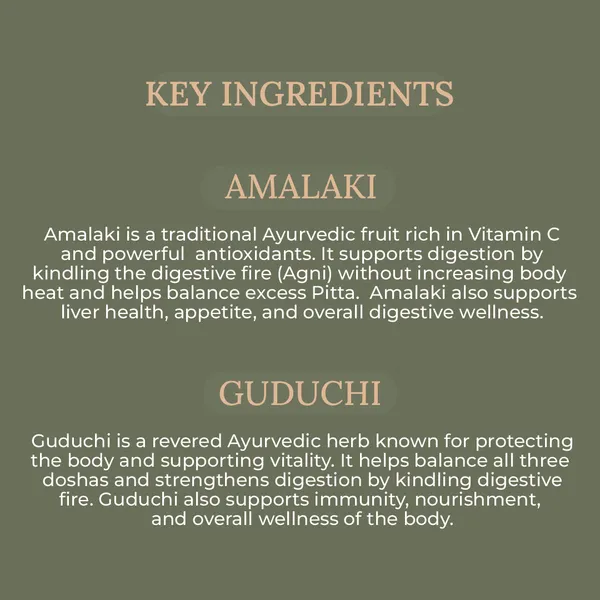
AMLAKI is used as a traditional household plant in India. On Ekadashi day the Amla tree is worshipped. It is believed that Hari himself resides in this tree. Amalaki Ekadashi is observed during the waxing phase of the moon in Phagun month (February to March). An interesting story was once narrated by Sage Vasishta and is found in the Brahmanda Purana. People who observe a fast on this day listen to a recital of Amalaki Ekadasi Vrat Katha during the fast.
Amla contains bioflavones, flavones, polyphenols, flavonoids, and carotenoids. The major constituents in the fruit are gallic acid, ellagic acid, phyllemblic acid, and emblicol, and the minor ones are alkaloids viz., phyllantidine and phyllantine, pectin, and minerals. It is the richest source of Vitamin C. 10 g of fresh fruit contains 600 to 900 mg of Vitamin C. We can also say that the amount of Vitamin C present in a mid-sized Amla is four times that of an orange and eight times the amount found in a tomato. According to recent findings, fruits lose Vitamin C more rapidly when dried in the sun than in the shade.
From an Ayurvedic perspective, digestion begins with the experience of taste, and Amla contains five of the six tastes, lacking only the salty taste. Further, Amla sharpens the sense of taste itself and so it is both stimulating and tonifying to the first stage of digestion. Amla also improves appetite and kindles Agni (the digestive fire), which are both at the core of healthy digestion. Despite the fact that its predominant taste is sour, Amla stokes the digestive fire without aggravating Pitta. Amla cleanses and protects the liver, which plays a critical role in transforming food into physiologically useful nourishment, because Pitta and Agni are so intimately connected that the health of the digestive fire suffers when Pitta is aggravated. Amla is particularly suited to clearing excess Pitta from the digestive tract; its bitter taste and cooling energy help to flush excess heat out through the bowel.
Amla can be especially supportive to digestion during the summer months when heat tends to accumulate in the body, particularly for those with Pitta-predominant constitutions.
GUDUCHI
Upon translation of its name, it becomes obvious that the herb Guduchi plays a significant role in the Ayurvedic medicine chest.
In Sanskrit, Guduchi means that which protects the body from diseases and points to a Hindu myth that praises it for offering the gift of life and keeping celestial beings eternally youthful.
In the epic myth of Ramayana, Ravana, the demon king of Lanka, kidnaps Sita, the wife of Lord Rama. In a great war, Rama and his army of monkeys and bears fight a bloody war, eventually slaying the evil Ravana on the battlefield. Upon surveying the carnage, Lord Rama says a special prayer, asking Indra to resurrect all of his mortally injured animals. Indra hears and grants his wish by sprinkling nectar from the heavens, which resurrects the animals. And wherever this nectar fell is where the plant Guduchi began to grow.
Guduchi has bitter and astringent rasa, and as virya, meaning hot; and it is known to have the action of kindling digestive fire. As such, Guduchi pacifies all three doshas Vata, Pitta, and Kapha. The Ayurvedic Pharmacopoeia of India, published by the Government of India, mentions Guduchi's Kapha and Pitta?pacifying properties by virtue of its bitter and astringent taste. The plant's sweet, post?digestive effect balances Vata and Pitta doshas and provides overall nourishment to the body.
According to Ayurveda the most common cause of acidity is irregular dietary habits and lifestyle. Excess acid can be triggered by stress or certain foods like caffeine, chocolate, high fat meals, orange juice, or tomato juice. Hyperacidity is defined as an excessive level of acidity in the stomach. Ayurveda calls it Amlapitta. Millions of people suffer from this problem. The results are problems like indigestion, heartburn, acute stomach pain, and acid reflux.
SELF-CARE TIP:
Dietary habits: Develop regular eating habits and eating times and avoid overeating, irregular eating, eating when earlier food is not digested, prolonged fasting, eating spicy, excessive oily food, etc., which can lead to indigestion.
Lifestyle: Intake of half a liter of water early morning on empty stomach, and an early and light dinner for maintaining a healthier lifestyle. Avoid anxieties, stress, tension, worries, over-exertion, and sedentary lifestyle to avoid acidity.
BENEFITS OR INGREDIENTS
BENEFITS OF ACID RELIEF:
SUPPORTS HEALTHY STOMACH: A combination of Amalaki and Guduchi Acid Relief is helpful in providing relief in heartburn and indigestion.
ACIDITY RELIEF: It is useful in case of acidity because Pitta and Agni are so intimately connected, the health of the digestive fire suffers when Pitta is aggravated. Amalaki is particularly suited to clearing excess Pitta from the digestive tract; its bitter taste and cooling energy help to flush excess heat out through the bowel.
IMPROVES GUT HEALTH: Regular use of Amla fruit (Amalaki) can strengthen digestion and increase absorption of food and help control indigestion. This also helps calm Pitta-related digestive adversities like Acidity. Amla's mildly laxative property assists in the cleansing of the digestive tract and regulates the bowels, which helps to ease constipation. Amla can help relax the abdominal muscles and provide relief in diarrhea and dysentery too.
FORMULATION & INSTRUCTIONS
FORMULATION: Patented formulation
PROCESSES: Made in a GMP-certified facility
CAPSULES: All vegetarian capsules
DOSAGE: Take 1 to 2 capsules daily with water or as directed by the physician.
RECOMMENDATION:
SHELF LIFE: 3 years from the date of manufacture.
STORAGE INSTRUCTIONS: Store in a cool, dry place away from direct sunlight. Keep out of reach of the children.
SELF-CARE TIP:
Develop regular eating habits and eating times and avoid overeating, irregular eating, eating when earlier food is not digested, prolonged fasting, eating spicy, excessive oily food, etc., which can lead to indigestion.
Lifestyle: Intake of half a liter of water early morning on empty stomach, and an early and light dinner for maintaining a healthier lifestyle. Avoid anxieties, stress, tension, worries, over-exertion, and sedentary lifestyle to avoid acidity.
MORE DETAILS
ACID RELIEF
INDICATION: Acidity, Dyspepsia, and Abdominal Bloating
ACID RELIEF is one of the top Ayurvedic medicines for flatulence, abdominal pain, and gas, which is formulated using medicinal plants such as Amla and Guduchi. Its regular use helps in relieving a multitude of abdominal issues including abdominal gas, abdominal discomfort, belching, the feeling of fullness, and abdominal pain. The natural ingredients in this make it a natural and safe treatment for stomach-related diseases.
INGREDIENTS OF ACID RELIEF
AMLAKI is used as a traditional household plant in India. On Ekadashi day the Amla tree is worshipped. It is believed that Hari himself resides in this tree. Amalaki Ekadashi is observed during the waxing phase of the moon in Phagun month (February to March). An interesting story was once narrated by Sage Vasishta and is found in the Brahmanda Purana. People who observe a fast on this day listen to a recital of Amalaki Ekadasi Vrat Katha during the fast.
Amla contains bioflavones, flavones, polyphenols, flavonoids, and carotenoids. The major constituents in the fruit are gallic acid, ellagic acid, phyllemblic acid, and emblicol, and the minor ones are alkaloids viz., phyllantidine and phyllantine, pectin, and minerals. It is the richest source of Vitamin C. 10 g of fresh fruit contains 600 to 900 mg of Vitamin C. We can also say that the amount of Vitamin C present in a mid-sized Amla is four times that of an orange and eight times the amount found in a tomato. According to recent findings, fruits lose Vitamin C more rapidly when dried in the sun than in the shade.
From an Ayurvedic perspective, digestion begins with the experience of taste, and Amla contains five of the six tastes, lacking only the salty taste. Further, Amla sharpens the sense of taste itself and so it is both stimulating and tonifying to the first stage of digestion. Amla also improves appetite and kindles Agni (the digestive fire), which are both at the core of healthy digestion. Despite the fact that its predominant taste is sour, Amla stokes the digestive fire without aggravating Pitta. Amla cleanses and protects the liver, which plays a critical role in transforming food into physiologically useful nourishment, because Pitta and Agni are so intimately connected that the health of the digestive fire suffers when Pitta is aggravated. Amla is particularly suited to clearing excess Pitta from the digestive tract; its bitter taste and cooling energy help to flush excess heat out through the bowel.
Amla can be especially supportive to digestion during the summer months when heat tends to accumulate in the body, particularly for those with Pitta-predominant constitutions.
GUDUCHI
Upon translation of its name, it becomes obvious that the herb Guduchi plays a significant role in the Ayurvedic medicine chest.
In Sanskrit, Guduchi means that which protects the body from diseases and points to a Hindu myth that praises it for offering the gift of life and keeping celestial beings eternally youthful.
In the epic myth of Ramayana, Ravana, the demon king of Lanka, kidnaps Sita, the wife of Lord Rama. In a great war, Rama and his army of monkeys and bears fight a bloody war, eventually slaying the evil Ravana on the battlefield. Upon surveying the carnage, Lord Rama says a special prayer, asking Indra to resurrect all of his mortally injured animals. Indra hears and grants his wish by sprinkling nectar from the heavens, which resurrects the animals. And wherever this nectar fell is where the plant Guduchi began to grow.
Guduchi has bitter and astringent rasa, and as virya, meaning hot; and it is known to have the action of kindling digestive fire. As such, Guduchi pacifies all three doshas Vata, Pitta, and Kapha. The Ayurvedic Pharmacopoeia of India, published by the Government of India, mentions Guduchi's Kapha and Pitta?pacifying properties by virtue of its bitter and astringent taste. The plant's sweet, post?digestive effect balances Vata and Pitta doshas and provides overall nourishment to the body.